News

CPF - Svetovi/Worlds: Journal for Ethnology, Anthropology and Folkloristics

We invite you to submit abstracts for the upcoming special issue of Svetovi / Words titled “Fragile Environments and Emergent Vulnerabilities in the Age of Capitalocene” (tentative title) (eds. Nežka Struc & Sandi Abram).
In this issue we seek to thematize and explore intersections as well as disentanglement between environmental fragility and vulnerabilities that emerge in the lives of (more-than-)human beings. In the era of Capitalocene (Moore 2017; 2018) when contemporary climate change ebbs and flows across the Earth as heatwaves, droughts, wildfires, severe storms, floods, and air pollution and crises become part of everyday lives (Fassin 2012, Podjed 2024) and constant urgency (Schwell 2023), the once reassuring narrative about the world, as Domínguez Rubio (2025) writes, is all but gone: “ontological security” is giving way to “a sense of ontological fragility, […] a fragility that is felt as the inescapable condition of life on this planet”. One condition shared, albeit unequally, across plural words.
If this horizon of planetary fragilities might index global “capitalogenic flows” (Lawson 2025), where ceaseless accumulation of capital depends on the production of “systemic harm to socio-ecological infrastructure” (Wojnarowski 2025: 3) in particular contexts, then vulnerability names the  conditions through which those harms are inscribed in bodies, landscapes and multispecies “lifeworlds” (Ingold 2000) - as feelings, affects and lived experiences. What remains, in many places, are debilitated bodies and damaged environments, where “debility” (Levine 2025, Mohamed 2023, Puar 2017) – injury and exclusion produced by economic and political forces – disrupts the category of disability as not something that is inscribed into lives, but created by violent social arrangements. It describes the ongoing conditions of exposure, and damaged environments in which (more-than-)human beings must continue to live.

Proposed timeline:

- 6 March 2026: deadline for abstracts

- 1 August 2026: manuscript submission deadline

- October 2026: peer reviews

- July 2027: publication

For submission please visit our registration page: https://forms.cloud.microsoft/e/X6k3tWBQR4 .

Read more...

CFP: Revista de História das Ideias - "Culturas do Fogo"

Convite à apresentação de artigos nº 45, 2027 – Dossiê Temático: Culturas do Fogo

Prazo de entrega 30 de setembro de 2026

Coordenadores: Frederico Ágoas (CICS.NOVA - NOVA FCSH) e Miguel Carmo (IHC – NOVA FCSH / IN2PAST)

Mais informações em:

Convite à apresentação de artigos nº 45, 2027 – Dossiê Temático: Culturas do Fogo – Prazo de entrega 30 de setembro de 2026 | Revista de História das Ideias

Read more...

CFP: “History of Vegetation Science”

Twin Special Issue “History of Vegetation Science” – call for abstracts

Prepared by Sandra Mesquita, Valério Pillar, and Wolfgang Willner

This Special Issue, dedicated to the history of vegetation science, consists of two parts that are published simultaneously in the Journal of Vegetation Science (JVS, IF = 2.7) and in Vegetation Classification and Survey (VCS, IF = 3.0). Manuscripts on topics related to the development of vegetation typologies and vegetation surveys and underlying methods will be considered for publication in VCS, while those focused on the history of hypothesis-driven approaches, numerical methods, etc., will be directed to JVS.

More information at:

Twin Special Issue "History of Vegetation Science" - call for abstracts - vegsciblog.org

Read more...

CFP: Congreso Internacional Agua y Territorio - Il valore dell’acqua: stato dell’arte e nuove prospettive di ricerca

Dopo i congressi internazionali di Évora (2024) e di Jaén (2025), la sede di Milano del CNR Istituto di Studi sul Mediterraneo con l’Università degli Studi di Milano hanno accolto l’invito ad organizzare il III Congresso Internazionale Agua y Territorio, che si terrà l'8 e il 9 giugno 2026 a Milano.

PROPOSTE DI COMUNICAZIONE

•    Data limite: 30 gennaio 2026.

•    Accettazione: 15 febbraio 2026.

Read more...

CFP: Locating Knowledge: Science and Technology in Commodity Frontiers

CALL FOR PAPERS

Commodities of Empire Annual International Workshop

2-3 September 2026Spanish National Research Council, Madrid

Locating Knowledge: Science and Technology in Commodity Frontiers

Organisers: ‘Commodities of Empire’ British Academy Research Project, ERC Consolidator Grant WILDHIST, and the AMBTEC project funded by the Spanish State Research Agency.

Deadline for abstract submissions: 14 February 2026.

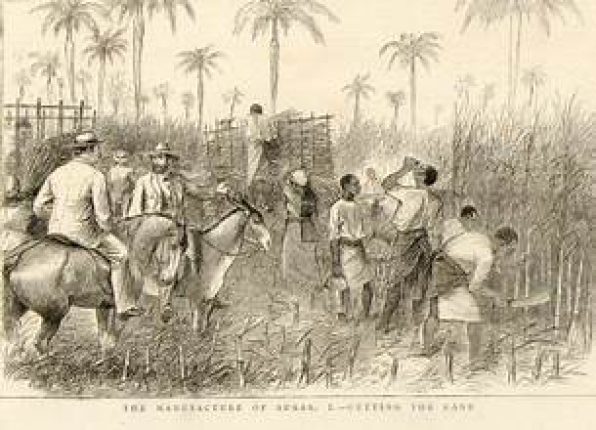
The scientific and technological dimensions of commodity history have long attracted attention, with recent work offering comprehensive accounts of the transnational movement of experts, technologies, and scientific ideas. Yet the skills, techniques, and expertise required for resource extraction and processing in and around commodity frontiers remain less thoroughly explored. This workshop seeks to redirect attention to these frontiers of commodity production as sites of knowledge generation, codification and exchange from early modern times to the present. While remaining attentive to imperial, trans-imperial and transnational knowledge networks, the primary aim of this workshop is to examine commodity frontiers themselves as key locations for the development of techno-scientific knowledge and practice by both local and transnational actors. We are especially interested in historical research on indigenous technologies and traditional practices of commodity production, many of which held central economic and cultural significance.

The workshop also welcomes works that reflects on the historiographical and epistemological implications of recognizing local protagonists –such as indigenous peoples, colonized populations, and migrants at commodity frontiers– as active contributors to the production and circulation of knowledge. The workshop further examines the role of institutions and associations (cooperatives, workers’ unions, botanic gardens, agricultural stations, etc.) that operated in these regions as generators, intermediaries, translators, and sometimes gatekeepers of knowledge.

The workshop aims to contribute to ongoing efforts to make the history of science and technology less Eurocentric and US-centric by explicitly broadening inquiry into knowledge histories in Africa, Asia, and Latin America, while remaining open to cases from all geographical regions. By placing local knowledge at the center of global commodity history, it frames commodity frontiers as complex technological landscapes and sites of experimentation shaped by plural socio-economic and ecological contexts as well as by unequal power relations. The workshop therefore invites papers that critically engage with these trans-local dynamics and local-global articulations, while also illuminating alternative histories of the making of scientific and technological knowledge.

Read more...

VI Report(h)a - Book of abstracts

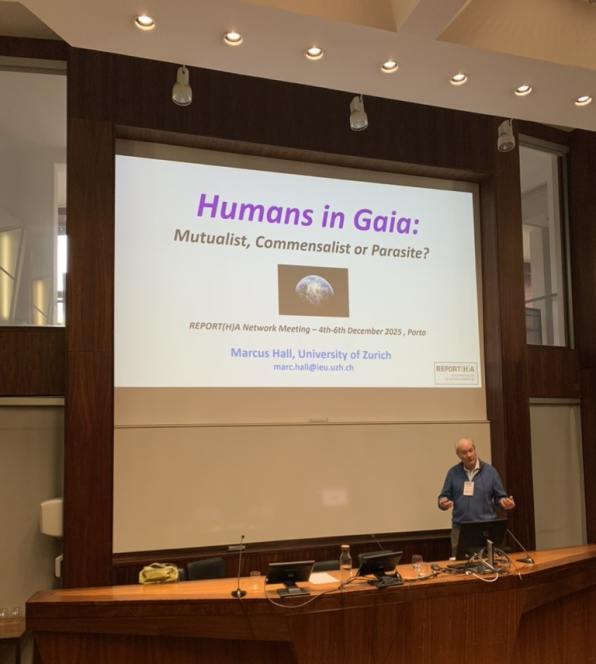
No mês de dezembro decorreu mais um encontro da Report(H)a, desta vez acolhidos pelo CITCEM. 

O encontro contou com as comunicações de mais de 30 investigadores e as palestras dos especialistas Marcus Hall (University of Zurich ) e Tim Soens (University of Antwerp).

Agradecemos a todos aqueles que contribuíram para um evento científico de excelência e convidamos a que consultem a publicação do livro de resumos, acessível em:

Contar (multi)espécies – estará o futuro atrás de nós? (Re)ler arquivos e metodologias ambientais | Faculdade de Letras da Universidade do Porto

Partilhamos também a ligação para um filme documental sobre as Serras do Porto, local da visita de campo, onde fomos muito bem acolhidos por Manuel Miranda Fernandes: 

https://www.youtube.com/watch?v=8-86VF2K4t4

................................................................................................................................

In December, another Report(H)a meeting took place, this time hosted by CITCEM.

The meeting featured presentations by more than 30 researchers and lectures by experts Marcus Hall (University of Zurich) and Tim Soens (University of Antwerp).

We would like to thank everyone who contributed to this excellent scientific event and invite you to consult the publication of the book of abstracts, available at:

Contar (multi)espécies – estará o futuro atrás de nós? (Re)ler arquivos e metodologias ambientais | Faculdade de Letras da Universidade do Porto

We also share the link to a documentary film about the Serras do Porto, the location of the field trip, where we were warmly welcomed by Manuel Miranda Fernandes:

https://www.youtube.com/watch?v=8-86VF2K4t4


Read more...
Subscribe to this RSS feed

About REPORT(H)A

News & Events